



British cinema audiences shrank dramatically during the decade that gave collectors some of their most enduring wall art. UK admissions fell from 101 million in 1980 to 54 million in 1984, according to BFI Screenonline, which identifies television and home video as part of the competition. Cinema attendance alone doesn't explain why these films still matter.
For my money, no decade beats the 1980s for cult favourites worth putting on a wall. That's a collector's judgement, not a proven league table of cultural importance or investment returns. The appeal is tangible: painted science-fiction cityscapes, confrontational horror imagery and publicity that sells an atmosphere rather than a cast.
80s cult classic movies reward repeat viewing, and their posters reward careful buying. An original theatrical sheet, an authorised re-release and a modern reproduction can share familiar imagery while representing very different purchases. The right choice depends on whether you want release-history significance, a particular design or an affordable display piece.
Buying principle: Buy the documented edition you actually want, not the oldest-looking sheet in the listing.
These choices pair film appreciation with the practical questions that matter before money changes hands: which artwork to seek, what distinguishes the campaign, and how to display it without sacrificing its condition. None requires a flawless copy to be worth owning. Honest wear and clear provenance are better companions than vague promises of rarity.
Table of Contents
- 1. Blade Runner (1982)
- 2. The Thing (1982)
- 3. Videodrome (1983)
- 4. Evil Dead II (1987)
- 5. Big Trouble in Little China (1986)
- 6. Repo Man (1984)
- 7. Heathers (1988)
- 8. They Live (1988)
- 9. Hellraiser (1987)
- 10. The Lost Boys (1987)
- The 80s Cult Classics at a Glance
- Start Your Cult Classic Collection the Right Way
1. Blade Runner (1982)
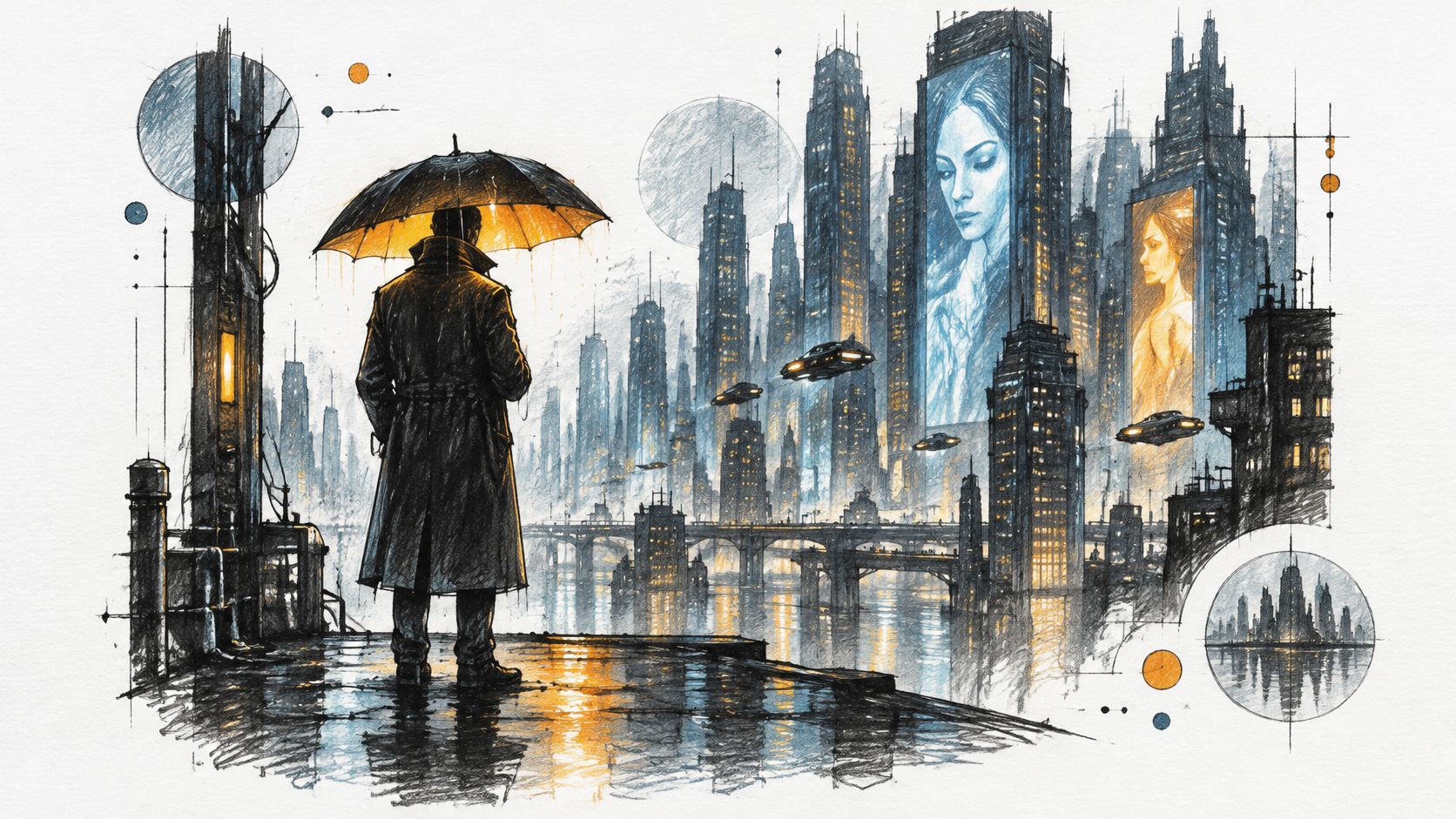
Rain, reflected neon and uncertain humanity make Blade Runner unusually rewarding company on a wall. Ridley Scott's detective story follows a reluctant hunter pursuing replicants, but its lasting attraction lies in the uneasy relationship between manufactured life and human feeling. Its different cuts also give enthusiasts something more substantial to debate than favourite scenes.
Chase the illustrated city-and-portrait campaign if you want the film's noir atmosphere rather than a straightforward cast photograph. Decide whether you're collecting its original theatrical identity or a later presentation of the film. An authentic re-release poster is a legitimate cinema artefact, but it isn't an original-release sheet.
Choose the campaign before the frame
Ask for an uncropped photograph of the entire poster, followed by close-ups of its lower credits and margins. Compare these against a documented example of the same territory, format and release campaign, not another image with the same central illustration. The guide to sci-fi films and posters is a useful starting point for thinking about the wider collection.
For a home-cinema entrance, a UK campaign in a wide format can make more sense than a portrait sheet squeezed beside a door. Specify UV-filtering glazing, conservation backing and a spacer to keep the paper off the glazing. Keep the display away from direct sunlight regardless of the glazing's protection.
2. The Thing (1982)
The creature is frightening, but the distrust makes The Thing stick. John Carpenter traps an Antarctic research team with an organism that can imitate its hosts, turning every conversation into a possible betrayal. Rob Bottin's creature effects give that suspicion a revolting physical form.
For the poster, I'd favour the hooded figure with light erupting from its face. It communicates the threat without reducing the film to a catalogue of monsters. That restraint makes it particularly effective in a shared room where more explicit horror artwork might be unwelcome.
The trailer provides a useful reminder of the atmosphere the artwork needs to carry.
Inspect the title and the paper
A shared title across different productions makes a casual listing risky. Check the cast, director, distributor information and full credits rather than accepting a seller's date in isolation. A modern print can reproduce the familiar artwork, so the image alone proves very little.
- Request condition photographs: Look closely at fold intersections, edge tears and any apparent surface repair.
- Keep mounting reversible: Ask for conservation hinges rather than adhesive applied across the back.
- Preserve the contrast: A restrained dark frame suits the cold palette, but leave sufficient separation between paper and glazing.
For a dedicated horror room, this is a strong standalone purchase. Give the image breathing space rather than surrounding it with competing creature portraits.
3. Videodrome (1983)
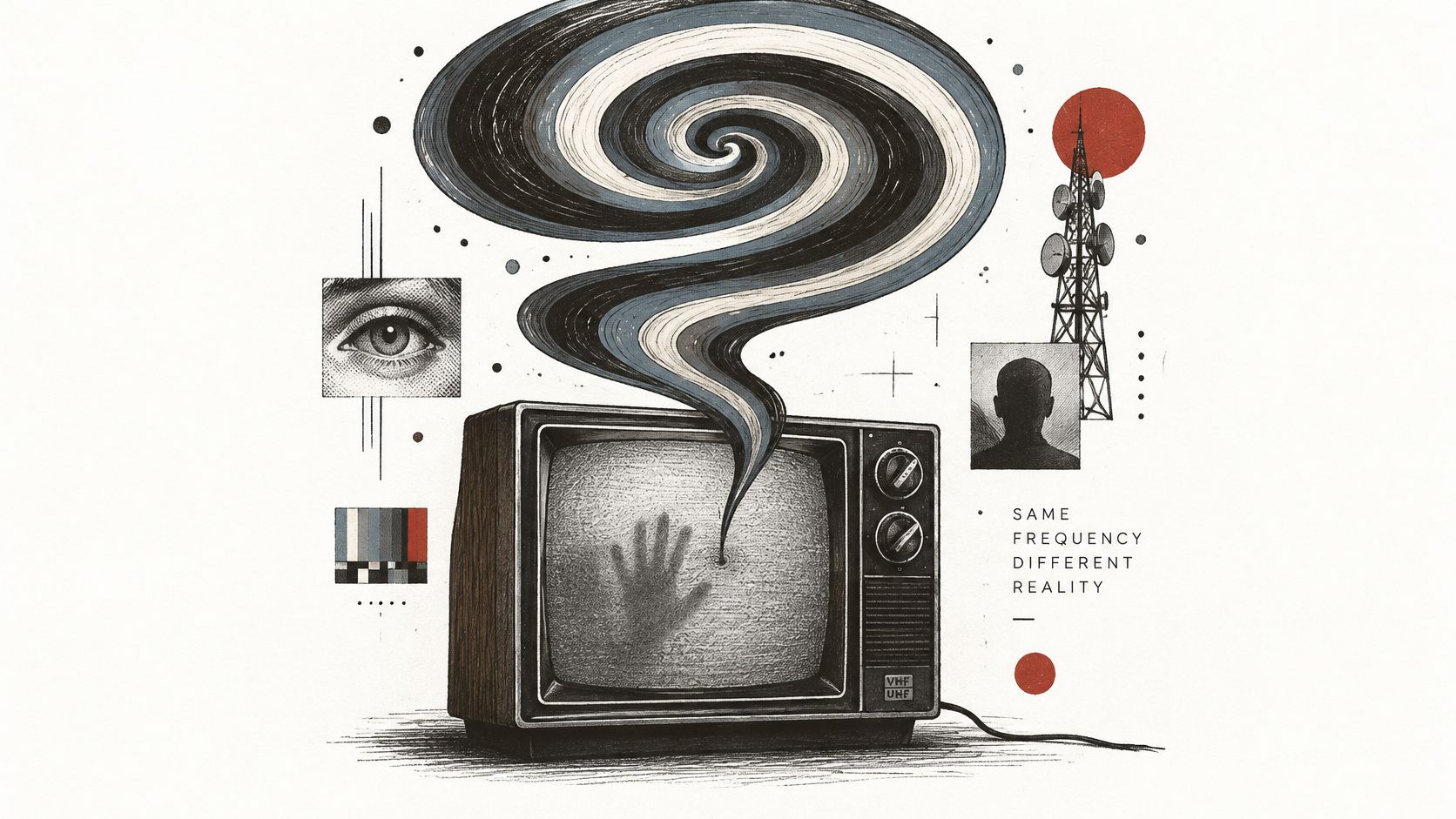
A television executive discovers a broadcast that seems capable of changing both mind and body. David Cronenberg makes that premise intimate and uncomfortable, mixing media obsession with flesh that refuses to behave normally. Videodrome earns its repeat viewings because you can't comfortably separate the hallucination from the argument.
Seek campaign artwork that makes the screen feel threatening, whether through a figure, a television motif or a stark graphic treatment. Don't assume every striking internet image was issued for cinemas. Alternative art can be excellent decoration, but it belongs in a different collecting category.
Match the format to the composition
A portrait campaign works well beside a shelf of film books or physical media. Choose a narrow frame that doesn't compete with the central imagery, then use conservation-quality materials behind the sheet. Avoid a position directly above an amplifier, radiator or other heat source.
When comparing copies, inspect lettering and credit lines as well as colour. Soft small print can indicate a copied image, but a sharp photograph doesn't authenticate paper by itself. Ask about provenance, dimensions and restoration.
A beautifully printed reproduction is still a reproduction. Presentation quality and historical authenticity answer different questions.
If your interest is screen culture rather than horror franchises, this makes a more personal starting point than collecting whichever title is most familiar.
4. Evil Dead II (1987)
Evil Dead II makes panic funny without making the danger disappear. Sam Raimi sends Ash through a cabin-bound assault of demonic possession, physical punishment and slapstick, with a camera that seems almost as unstable as its hero. It's an especially good choice for collectors who like horror with a mischievous streak.
The skull-led campaign is the obvious artwork to investigate. Its directness works from across a room, whereas busier character imagery may reward closer inspection. The Evil Dead poster collecting guide offers a useful route into the franchise's different visual identities.
Separate cinema publicity from video nostalgia
British horror collecting sits within a distinctive censorship history. The BFI's account of the video nasties records 72 videos on the evolving prosecution list, with 39 successfully prosecuted. That history concerns a wider group of films, not an automatic classification for every horror sequel or campaign.
For this purchase, ask explicitly whether the sheet advertised a theatrical release, home-video edition or later screening. Don't let a seller use “vintage” as a substitute for an answer.
A practical display would pair it with another Evil Dead campaign in matching frames. Keep the mounting reversible and the labels accurate: a video poster can carry genuine nostalgia without needing to masquerade as theatrical publicity.
5. Big Trouble in Little China (1986)
Jack Burton talks like the hero of a much simpler film. The pleasure of Big Trouble in Little China is watching that confidence collide with supernatural forces, martial arts and people who understand the situation better than he does. Carpenter's mixture of fantasy and comedy makes the film feel cheerfully ungovernable.
For collectors, the illustrated ensemble approach is the attraction. Look for a campaign that combines character portraits with the film's supernatural spectacle. Dense artwork needs enough display space for its smaller details to remain enjoyable.

Let condition guide the choice
Say you're buying for a living room rather than an archive. A complete, accurately described folded original may be a better fit than an extensively restored copy whose brighter appearance conceals substantial work. Ask which areas have been repaired or retouched.
- Check the borders: Cropped margins can remove credits and make edition comparison harder.
- Inspect saturated areas: Request photographs without strong reflections or heavy image processing.
- Choose a sympathetic frame: Warm neutral wood can complement the palette without competing with it.
Keep decorative backing boards away from the paper itself. A visually suitable frame still needs conservation-quality backing and a barrier from the glazing.
Don't buy on colour intensity alone. A modern reproduction may look unusually punchy, while a genuine sheet may have a quieter appearance that photographs poorly.
6. Repo Man (1984)
If polished hero portraits leave you cold, Repo Man offers a better collecting direction. Alex Cox combines car repossession, punk attitude, deadpan comedy and a mysterious vehicle into a film that treats respectable behaviour with deserved suspicion. Its appeal is inseparable from its rough-edged personality.
Prioritise artwork that preserves that abrasive graphic character. A car-led or boldly typographic campaign can sit convincingly beside music memorabilia without turning the room into a generic film-poster display. Keep an original soundtrack sleeve separate from the poster rather than mounting everything onto a common adhesive board.
Buy the wear you can live with
For a study containing gig posters and records, a lightly worn theatrical sheet can look entirely appropriate. The important distinction is between stable cosmetic wear and damage that needs attention.
Examine the reverse for tape, stains and writing. Ask whether the paper feels brittle and whether any folds are splitting, then request detail photographs rather than relying on a flattering framed view.
Condition judgement: Honest folds can be acceptable. Concealed repairs, active mould and unexplained staining require a different conversation.
Use a simple frame and conservation hinges, allowing the paper to sit naturally rather than forcing it perfectly flat with pressure. Don't attempt household cleaning or improvised flattening before consulting a paper conservator. A modest-looking mark is preferable to an irreversible repair carried out just to improve a listing photograph.
7. Heathers (1988)
The cheerful language of teen popularity becomes something poisonous in Heathers. Michael Lehmann's black comedy, written by Daniel Waters, turns school hierarchies into a setting for cruelty, manipulation and escalating violence. Its sharpness makes it a different collecting proposition from straightforward teen nostalgia.
Look for campaign artwork that retains that tension between glamour and menace. Cast-led designs can suit a bedroom or dressing area, but the poster shouldn't become interchangeable with a conventional school comedy. The title treatment and accompanying copy matter as much as the photograph.
Compare like with like
A gift buyer might encounter an original cinema sheet, a later screening poster and artwork connected with the stage adaptation. Each can be appealing, but only one may match the recipient's attachment to the film. Read the credits before choosing the prettiest thumbnail.
- Compare the same campaign: Different territories can use different colours, layouts and publicity photographs.
- Check fine detail: Look at faces, title edges and small lettering for signs of a scanned reproduction.
- Ask for disclosure: Restoration, trimming and backing should be described before purchase.
Colour consistency is useful evidence, not a standalone authenticity test. Lighting, photography and storage history can all change how copies appear online.
For framing, black or white keeps the presentation crisp. Use a window mount only if it suits the sheet's proportions and doesn't conceal information you value, especially the lower credits and original margins.
8. They Live (1988)
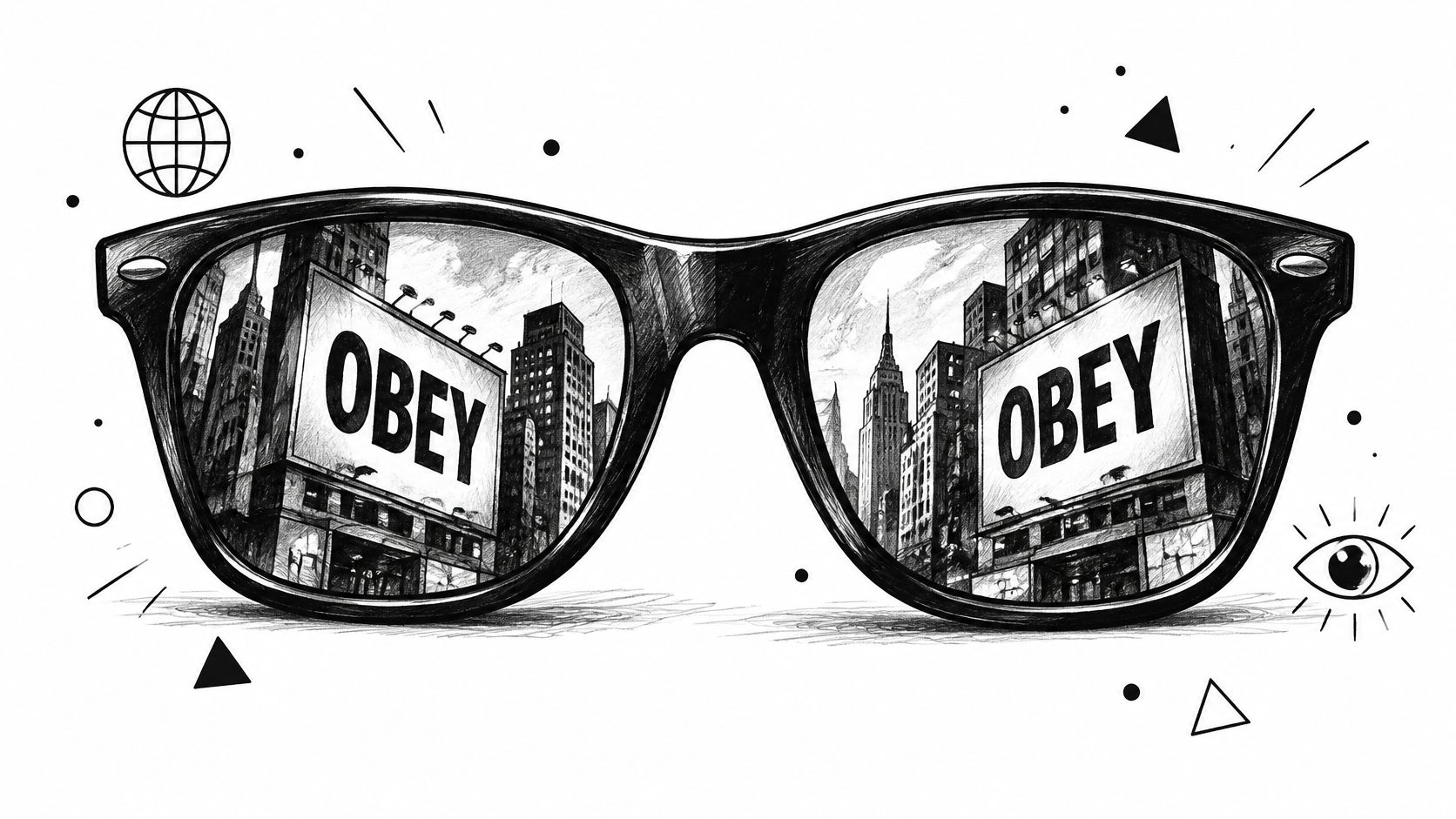
The sunglasses provide a wonderfully simple device: put them on and the reassuring surface of everyday life disappears. In They Live, Carpenter turns advertising and consumer obedience into a science-fiction threat. Its satire remains enjoyable because the film also commits to physical conflict and blunt, confrontational humour.
The eyewear imagery is the natural collecting target. It gives a poster an immediate connection to the premise without needing a crowded montage. However, its recognisability also makes it attractive to makers of unofficial prints.
Distinguish the film campaign from inspired art
An office or media room is a fitting setting for this poster. Before buying, establish whether you're looking at original theatrical publicity, an authorised later campaign or artwork inspired by the film. A familiar slogan and sunglasses motif don't establish release provenance.
Request photographs of distributor details, the credit block and all edges. Compare the complete layout with the same documented edition, including the placement of text, not just its headline image.
For display, choose a slim modern frame with a conservation-quality backing system. Keep the poster away from the desk lamp's heat and from a window that catches direct sun.
The best purchase isn't necessarily the most elaborate design. A clean graphic campaign can communicate the film more effectively than a decorative alternative, particularly when viewed across a working room.
9. Hellraiser (1987)
Hellraiser doesn't treat its monsters as an interruption to an otherwise comfortable world. Clive Barker builds horror around desire, damaged relationships and a puzzle box that opens a profoundly unwelcome doorway. Doug Bradley's Pinhead gives that world a precise and unsettling visual identity.
Seek the Pinhead-led campaign if you want the clearest connection to the film. The challenge is distinguishing this title's publicity from later franchise material. A recognisable character portrait alone isn't sufficient.
Keep the campaign identity intact
For a horror collection, pair the poster with a small descriptive label recording its territory, format and campaign. Keep purchase correspondence and condition photographs separately. These records are more useful than an unsupported claim that a sheet is rare.
British cult exhibition was broader than isolated home viewing. The BFI's Scala collection describes a venue that screened more than 4,000 films between 1978 and 1993, mixing horror with music, queer cinema and other unconventional programming. That context is a useful reminder to distinguish general-release publicity from posters for particular screenings.
For Hellraiser, scrutinise the title, cast credits and distributor information before accepting an attribution. Later franchise campaigns can be genuine originals in their own right without being the edition you intended to buy.
Dark artwork benefits from controlled lighting rather than a spotlight aimed at the sheet. Specify UV-filtering glazing, but don't treat it as permission to hang the poster in direct sun.
10. The Lost Boys (1987)
Rock music, coastal nightlife and teenage belonging give The Lost Boys its particular flavour. Joel Schumacher's vampire film makes danger look attractive before revealing its cost. That balance explains why its artwork can appeal to both horror collectors and buyers who mainly love the film's style.
The cast-led campaign is the sensible starting point. Choose a layout where the faces and title remain legible at your intended viewing distance. The guide to vampire movies of the 1980s provides further context for building a themed collection rather than buying disconnected images.
Buy for the recipient and the room
As a gift, this works best when you establish what the recipient remembers: the ensemble, the vampire imagery or a particular campaign. Don't assume that someone who loves the film wants the largest available format.
- Verify the edition: Ask for clear studio information, credits and the seller's attribution.
- Check portrait detail: Faces can make poor image reproduction especially noticeable.
- Protect the edges: Order the frame from the sheet's actual measurements, not a generic product description.
A bright contemporary frame can suit colourful artwork, but test a sample against the poster before committing. For a more restrained room, a neutral frame lets the cast image do the work.
Avoid permanent dry mounting to obtain a smooth gift-ready finish. Reversible framing preserves future choices, including the option to change the display or have the sheet professionally conserved.
The 80s Cult Classics at a Glance
| Film | Year | Genre | Collector Appeal | What to Check Before Buying |
|---|---|---|---|---|
| Blade Runner | 1982 | Neo-noir science fiction | Multiple versions and iconic artwork attract sci-fi and design collectors | Verify release year and printing details; protect bold colours from sunlight |
| The Thing | 1982 | Science fiction horror | Cult following and striking creature artwork appeal to horror collectors | Check printing credits and studio details; use acid-free mounting |
| Videodrome | 1983 | Body-horror thriller | Distinctive artwork appeals to horror and art-house collectors | Check paper and ink condition; keep away from heat |
| Evil Dead II | 1987 | Horror comedy | Franchise connections and bold artwork appeal to genre fans | Confirm whether it is a theatrical original or later home-video release |
| Big Trouble in Little China | 1986 | Martial arts fantasy adventure | Colourful artwork and Carpenter fan appeal suit general and cult collections | Check printing details and studio credits; verify authenticity |
| Repo Man | 1984 | Punk comedy | Cult status and punk soundtrack appeal to music and independent-film collectors | Inspect paper condition and check for signs of a limited original print |
| Heathers | 1988 | Satirical black comedy | Graphic artwork and lasting popularity appeal to pop-culture collectors | Compare colour reproduction to help identify reproductions |
| They Live | 1988 | Satirical science fiction thriller | Recognisable imagery and cultural relevance attract a wide range of collectors | Check original printing details and studio credits |
| Hellraiser | 1987 | Gothic horror | Iconic imagery and franchise connections create strong horror-collector appeal | Distinguish the 1987 original from later franchise releases |
| The Lost Boys | 1987 | Vampire comedy horror | Cross-generational recognition appeals to horror and teen-film collectors | Check studio and printing information; watch for reproductions |
Start Your Cult Classic Collection the Right Way
These films offer different routes into collecting. Blade Runner supplies noir science fiction, The Thing and Hellraiser take horror in contrasting directions, and Heathers and They Live make satire central to the attraction. Buy the artwork that expresses what you enjoy about the film, rather than treating cult status as a promise of rising value.
British audiences also discovered films through routes beyond their initial cinema campaigns. The BFI's cult-movies collection describes Moviedrome, which introduced viewers to more than 200 films during its run from 1988 to 2000. A film you first loved on television can therefore lead to a theatrical-poster purchase, but those are different parts of its history.
Establish the edition before spending
Start with a title, then decide on territory, campaign and format. Ask the seller to distinguish an original-release poster from an authentic re-release, home-video advertisement or reproduction. There's nothing wrong with preferring a later design, provided the description and price reflect what it is.
Request photographs of the actual sheet, including the reverse and any damaged areas. Keep the invoice, written attribution and condition description together. A certificate shouldn't replace a specific explanation of the poster itself.
For a first purchase, complete margins and transparent condition reporting are sensible priorities. Don't pay for supposed perfection without asking whether restoration produced it.
Plan the display before delivery
Measure the available wall space and discuss the actual paper dimensions with the framer. Choose conservation-quality backing, reversible attachment and separation from the glazing. Keep the poster out of direct sunlight, damp rooms and positions above radiators.
If you're buying as a gift, confirm whether the recipient has room for a UK Quad or US One Sheet before choosing the format. Framing costs and available wall space can make a smaller, well-chosen campaign the more practical purchase.
Famous Movie Posters is a UK-based retailer selling guaranteed original posters, with no reprints, alongside frames and framing guidance for UK Quads and US One Sheets. It offers free UK shipping and worldwide fulfilment supported by protective, purpose-designed packaging. Its Request a Poster service is an option when the cult title or campaign you want isn't currently listed.
Choose a film you'll still want to look at after the novelty has worn off. Then buy a clearly identified edition, preserve its paperwork and give its artwork a proper frame.
Visit Famous Movie Posters to browse guaranteed original posters for your favourite cult films, with no reprints and free UK shipping. Explore the framing options for your chosen format, or use Request a Poster to help track down a title that isn't currently listed.