



The popular advice is simple: find an officially licensed Corpse Bride image, frame it, and enjoy the gothic blue artwork. That approach misses the point for a serious collector. An authorised decorative poster isn't automatically an original cinema artefact, and a visually familiar design can have little connection with the British theatrical campaign.
For UK buyers, the useful questions are more demanding. Was the item issued for the original cinema release? Is it the correct British format? Do its dimensions, folds, printer details and paper characteristics support that description? A reproduction may look excellent on a wall, but it shouldn't be catalogued or priced as a genuine theatrical poster.
Table of Contents
- Theatrical Originals Versus Decorative Reprints
- Understanding the UK Quad Format and Release History
- Authentication Checks for Genuine Cinema Artefacts
- Navigating Artwork Variants and Market Availability
- Conservation Framing and Archival Storage Methods
- Building a Verified and Lasting Memorabilia Collection
Theatrical Originals Versus Decorative Reprints
The first distinction is between purpose and appearance. A cinema poster was produced to promote a film during a theatrical run. A decorative reprint was made for later display, usually because the artwork remained popular. Both may carry recognisable characters, official artwork and copyright information. Only one necessarily documents the film's original exhibition history.
That difference matters with Corpse Bride. The film's melancholy blue palette, Emily's portrait and Tim Burton association make it especially attractive to home decorators. Those qualities also make the design easy to reproduce. A clean modern print can therefore be more visually impressive than a folded original while remaining less significant to a collector.
Practical rule: Treat licensing as evidence that artwork was authorised, not as proof that the item was used in a UK cinema.
Country and format provide the first filter. A UK Quad belongs to Britain's cinema-poster tradition and has a different physical identity from a portrait-oriented US One Sheet. An international design may be entirely legitimate, but it shouldn't be described as a UK theatrical Quad unless the supporting evidence matches.
What collectors are actually buying
A genuine original offers more than decoration. It may retain the marks of distribution and display, including folds, printer information, paper characteristics and release-specific text. Those details can make a less pristine poster more historically meaningful than a flawless later print.
A decorative reprint can still be the right purchase if your priority is interior design, affordability or a particular artwork. The mistake is allowing that preference to blur the catalogue description. Buyers should ask whether they want cinema history, wall art, or both, then assess the item against that purpose.
For a serious collection, record the distinction in writing. Use terms such as “original UK theatrical poster”, “licensed reprint”, “home-entertainment artwork” or “fan-made design” only when the evidence supports them. Attractive artwork alone doesn't establish collectability, rarity or investment potential.
Understanding the UK Quad Format and Release History
The UK Quad is the principal British theatrical format associated with Corpse Bride. It measures approximately 30 by 40 inches, or about 76 by 102 centimetres, and is displayed horizontally rather than in the upright US One Sheet format. Confirm the sheet size yourself. Listing titles and frame measurements are unreliable evidence.
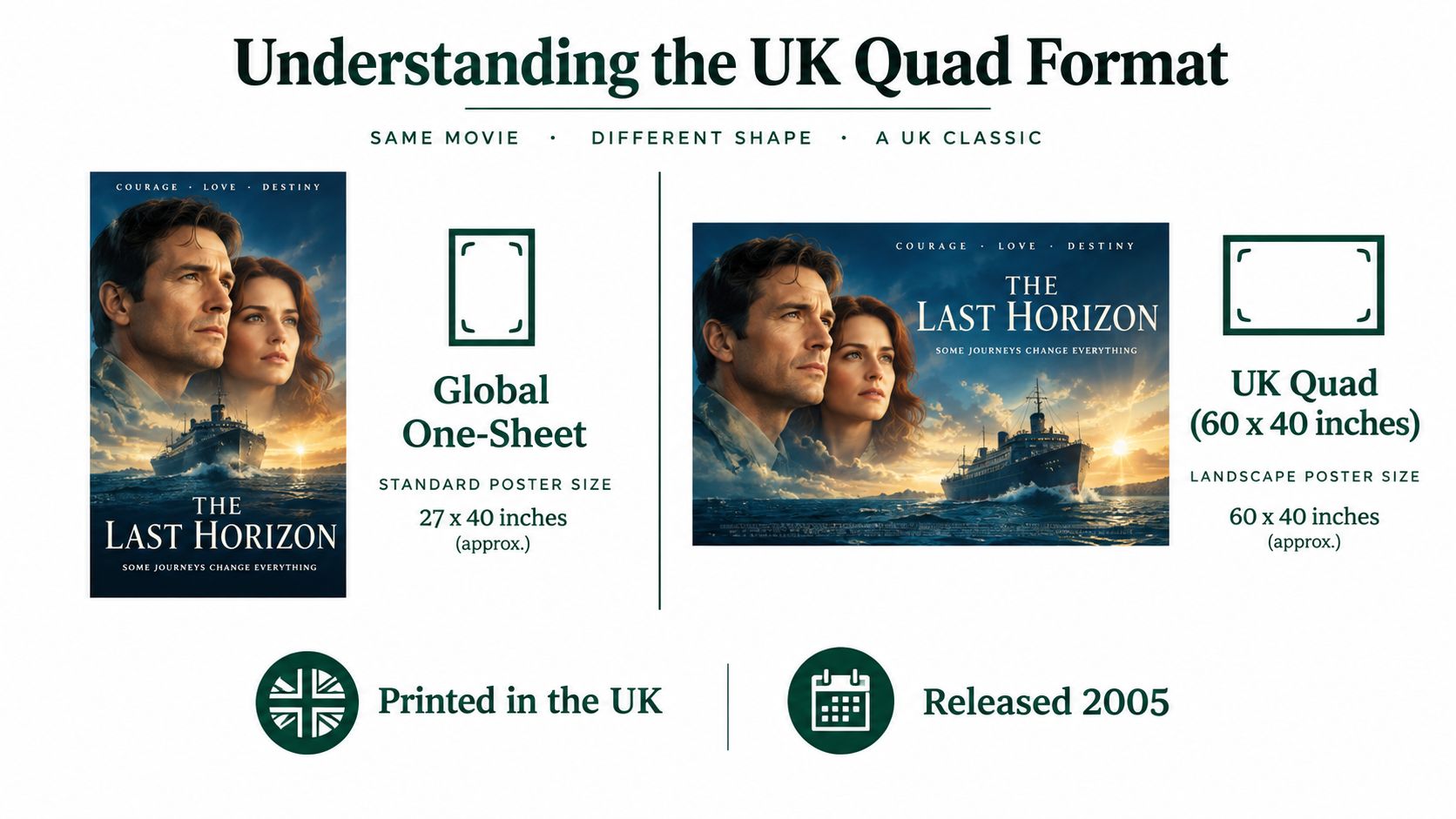
A surviving example is described as a 2005 double-sided UK Quad in unfolded condition. It is a useful reference for the type of sheet collectors may encounter, but double-sided printing alone does not prove cinema use. It may indicate that the poster was suitable for a light box. Check the paper stock, folds, printer or distributor details, release wording and provenance before treating it as a genuine theatrical artefact. This guide to Quad film posters gives useful format context for British collectors.
Dating the British campaign
The release chronology helps establish whether a poster belongs to the British theatrical campaign. Corpse Bride premiered at the Venice International Film Festival on 7 September 2005, followed by its US release on 23 September 2005. Its UK cinema opening came on 13 October 2005, so a British theatrical Quad should fit that window rather than the earlier American launch. The dates are recorded in the film's release history.
The BBFC record provides another comparison point. It lists a 77-minute 4-second 2D version classified on 14 September 2005, and a 73-minute 57-second version classified on 23 December 2005. Both carry the classification “mildly scary scenes”. These records help place the poster within the 2005 cinema campaign and distinguish it from later home-entertainment artwork. See the BBFC classification entry for Corpse Bride.
The film also had a substantial UK theatrical run. It debuted at number 3 in the UK chart on 21 October 2005, earned approximately £1.2 million in its opening period, remained in the chart for 11 weeks, and reached a reported UK total of about £5 million. These figures support the campaign's timing and scale, but they cannot authenticate a particular sheet. Physical evidence remains the deciding factor.
Authentication Checks for Genuine Cinema Artefacts
Authentication works best as a chain of evidence, not a single visual judgement. I wouldn't approve a purchase because the colours look right or because the seller calls it “rare”. The physical sheet, claimed release context and ownership history must agree.
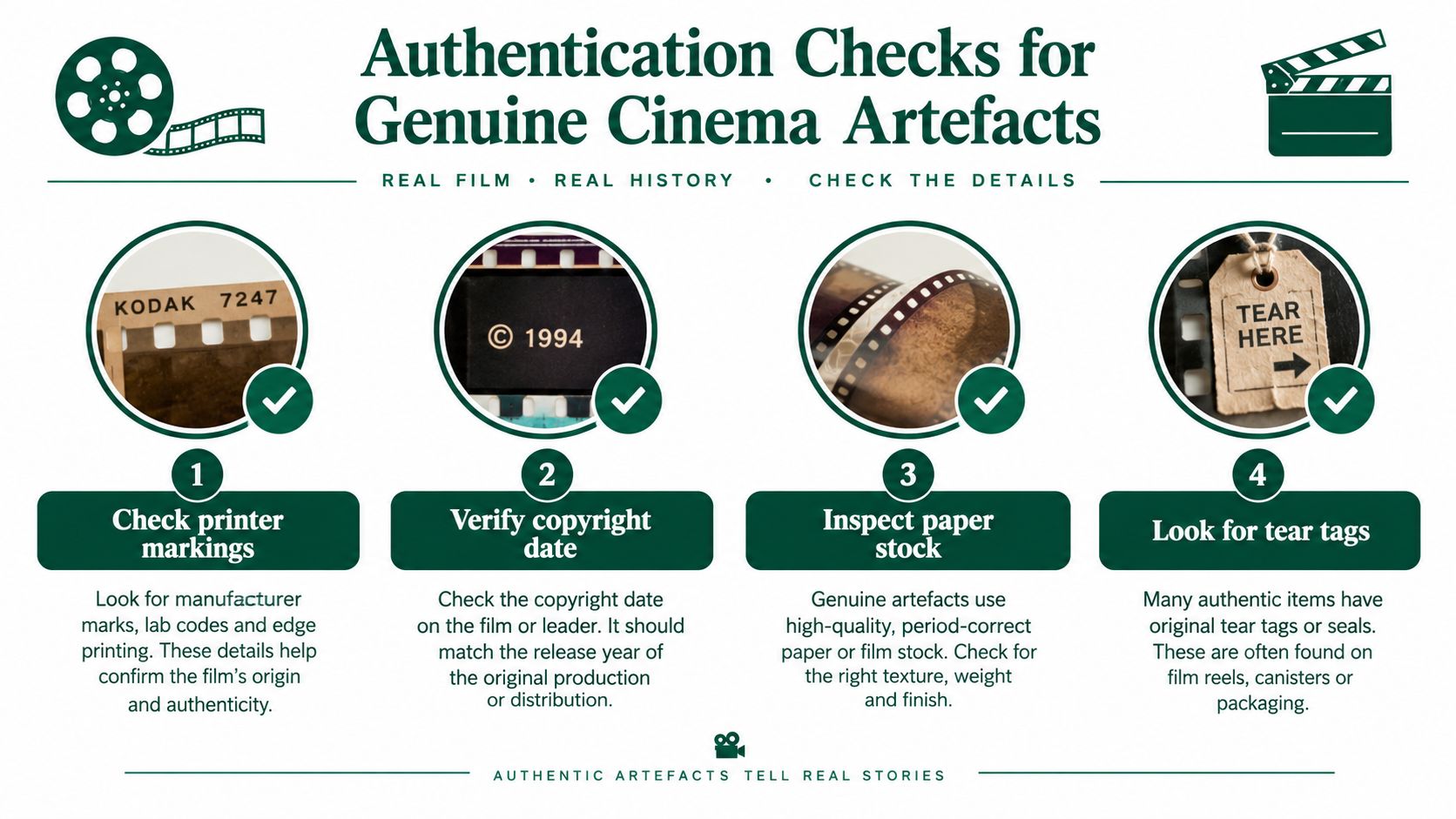
A practical inspection sequence
- Check the dimensions first. Measure the sheet without relying on the frame or listing description. A UK Quad should be approximately 30 by 40 inches, or 76 by 102 centimetres, as documented in this UK Quad poster example. The width-greater-than-height orientation is an important clue, though measurements alone can't authenticate an item.
- Read the printer and distributor markings. Photograph every edge, corner and lower margin. Look for printer details, distributor information, copyright text, release wording and any cinema-related marks. Missing information doesn't automatically make the poster false, but unexplained omissions weaken the description.
- Inspect the paper stock and printing. Compare the sheet's weight, surface and ink behaviour with the claimed format. A double-sided poster may have printing visible from both sides and may have been intended for a light box. A modern single-sided decorative print can imitate the front artwork without reproducing the original construction.
- Study the fold pattern and condition. Folds can be consistent with cinema distribution, while an unfolded example may be more desirable for display. Neither condition proves originality. Ask whether the seller has disclosed restoration, trimming, linen backing, edge repair, adhesive mounting or other interventions.
- Request provenance in writing. The useful record includes the claimed UK release context, dimensions, printer or distributor marks, paper stock, fold pattern, stamps and chain of ownership. The BFI National Archive's conservation practice demonstrates why inventory, provenance research, location tracking and condition assessment belong in a serious object record.
A seller who can provide detailed photographs and a coherent history makes the buyer's job easier. A seller who offers only a stock image and a confident adjective leaves the central question unanswered. The UK guide to original movie posters is useful background, but title-specific judgement still depends on the individual sheet.
Navigating Artwork Variants and Market Availability
Not every variation should be treated as a problem. Film campaigns can include different layouts, international artwork and formats created for separate territories or display systems. With Corpse Bride, the strongest visual cues often come from the blue moonlit atmosphere, character portraits and gothic romantic styling, but those cues don't identify the country of issue by themselves.
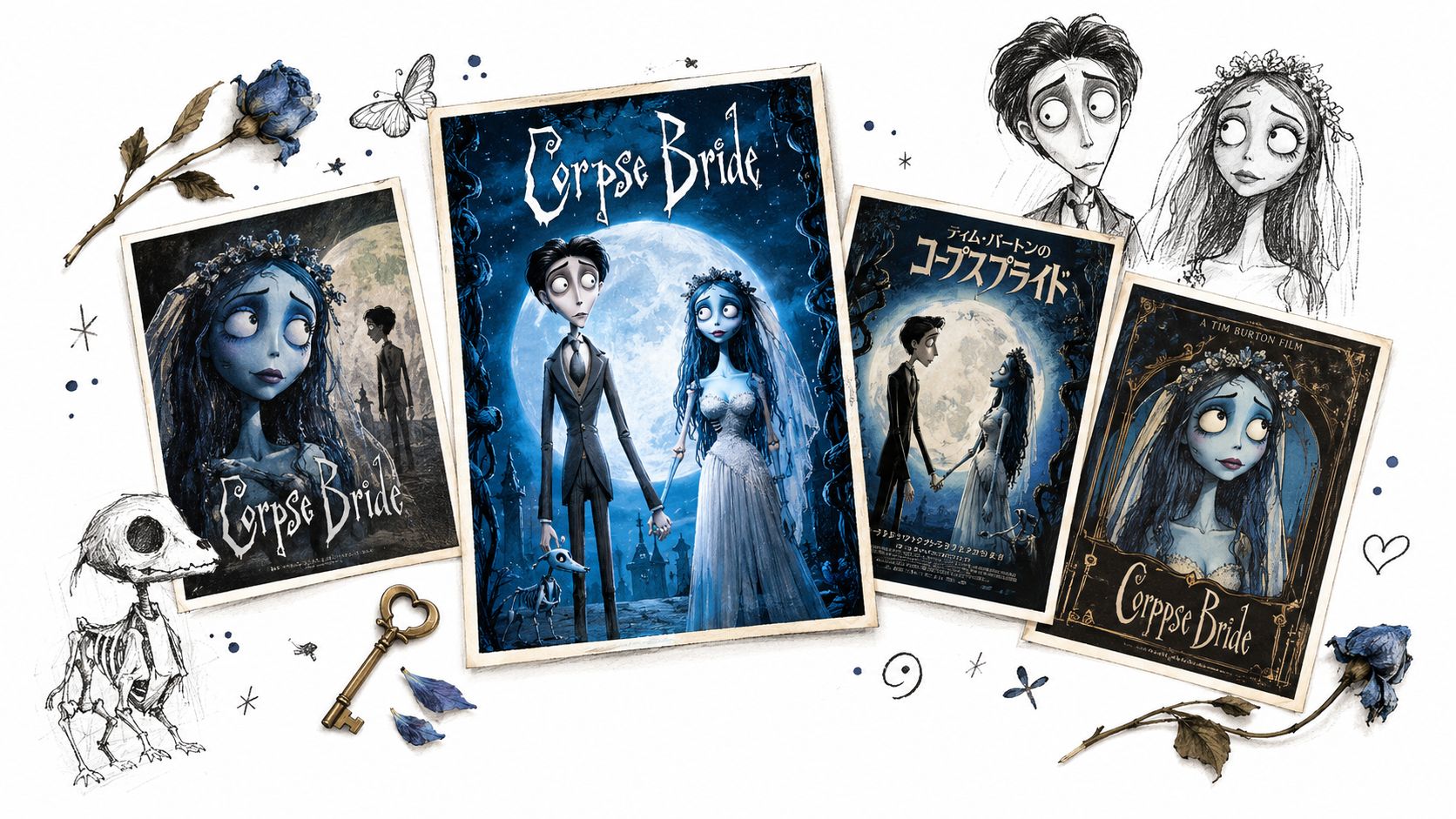
A UK Quad suits a collector who wants a British theatrical artefact and has suitable horizontal wall space. A US One Sheet or another international format may be preferable if the display area is portrait-oriented, but it should be catalogued accurately as that format and territory. Later decorative versions may offer cleaner colour and easier framing, yet they belong in a different category.
Choosing by collecting objective
| Priority | More suitable choice | Main compromise |
|---|---|---|
| British cinema history | An evidenced UK Quad from the 2005 campaign | The sheet may show folds or handling |
| Unfolded presentation | A documented unfolded original | Availability and provenance need careful checking |
| Interior decoration | A licensed decorative print | It isn't necessarily a theatrical artefact |
| Format comparison | A UK Quad alongside an international design | More space and more documentation are required |
The market rewards clarity more than artificial scarcity. An unfolded poster may be harder to find than a folded example, but that observation isn't a guarantee of rarity or financial value. Condition, restoration, provenance and the accuracy of the format description matter more than dramatic sales language.
I advise buyers to determine whether the poster is being purchased as a historical object or as artwork first. If the answer is both, preserve the evidence while improving the display. Don't remove labels, trim margins, or accept irreversible restoration just to make the sheet look newer.
Conservation Framing and Archival Storage Methods
Dark blue artwork is unforgiving under poor lighting and poor storage. Fading can flatten the contrast between the night sky, character detail and lighter lettering, while moisture can cause waviness, staining and mould. A frame may protect the poster from handling, but it can also trap problems if the materials and environment are wrong.
Display it without creating new damage
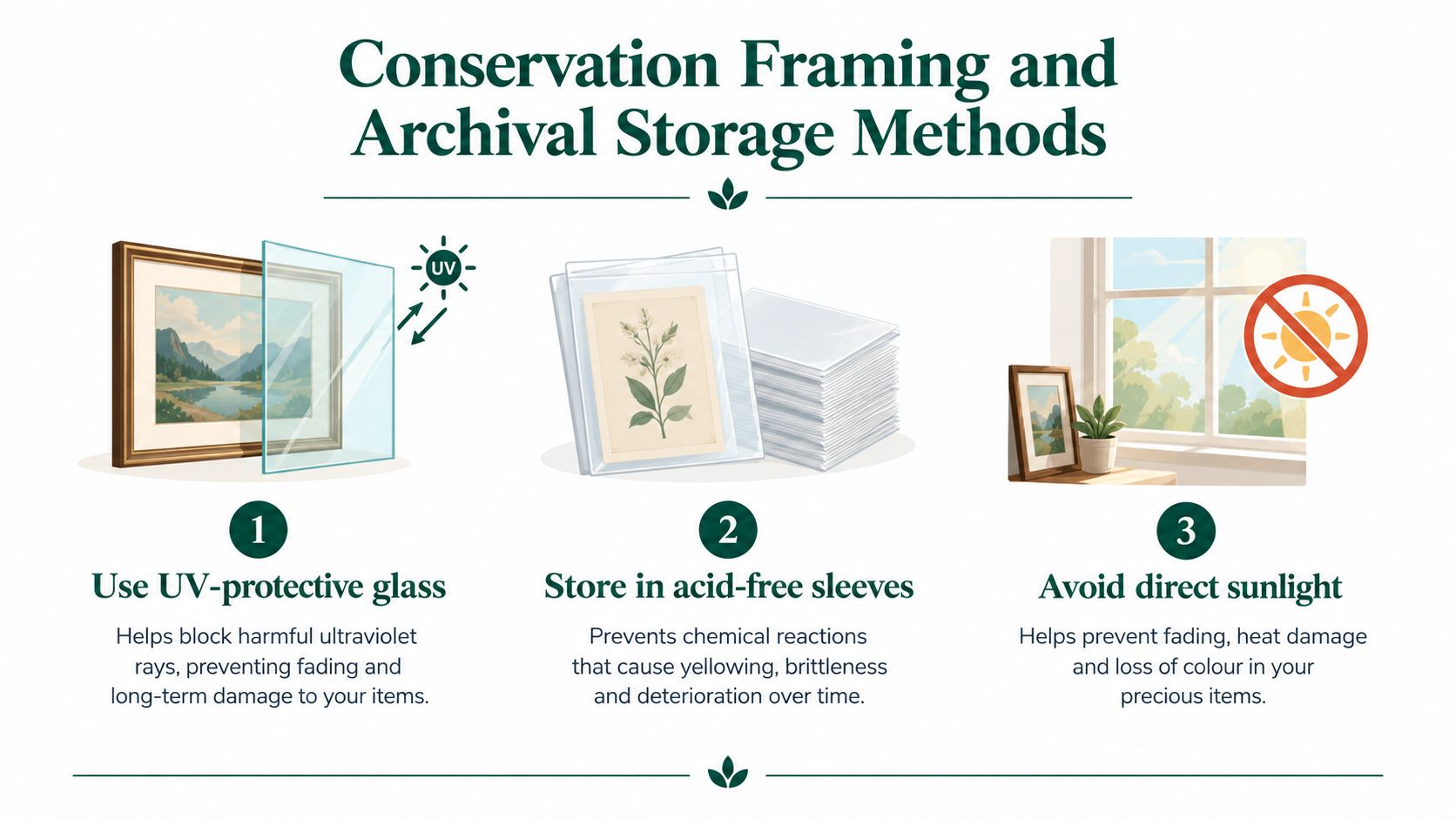
Use UV-filtering glazing to reduce the impact of display light, but don't treat it as permission to place the poster in direct sun. A spacer should keep the paper away from the glazing, preventing contact, condensation transfer and pressure against the surface. Acid-free mount board and reversible attachment are preferable to pressure-sensitive adhesive or permanent dry mounting.
A conservation framer should be able to explain the materials, not just recommend the most decorative moulding. Discuss the poster's dimensions, folded or unfolded condition, double-sided construction and any existing restoration before work begins. The Quad poster framing guide offers useful practical context, but the frame still needs to be specified for the individual sheet.
Match the method to the room
A shaded room is generally easier to manage than a bright living room. If the poster must be displayed in a brighter space, position it away from direct sunlight, use UV-filtering glazing and inspect the darker areas periodically for colour change. UV glazing reduces exposure. It doesn't eliminate fading.
Lofts, garages and damp cellars are poor choices because temperature and humidity can fluctuate sharply. Store the poster flat where possible, fully supported during movement, and protected in archival materials. The BFI's conservation guidance emphasises that preservation requirements depend on the material and its condition, while its collections work treats paper as a vulnerable heritage object. BFI conservation guidance supports this material-led approach.
For storage, use acid-free enclosures and avoid acidic backing, adhesive mounting and pressure-sensitive plastic. Inspect the sheet occasionally for mould, waviness, staining, embrittlement and colour change. If you notice a problem, don't flatten, clean or reattach the poster yourself. Record the condition and consult a paper conservator.
Light damage is cumulative. A poster can look fine for years and still be losing the evidence and colour that make it worth preserving.
The practical choice is often a rotation between display and flat archival storage. Display the poster when the room is suitable, then return it to a stable enclosure when the environment becomes too bright, damp or warm. That approach protects both visual impact and the physical clues used for authentication.
Building a Verified and Lasting Memorabilia Collection
A strong collection isn't just a group of attractive sheets. It is a set of objects with accurate descriptions, documented origins, sensible condition records and storage decisions that can be explained to the next owner. Corpse Bride works particularly well as an entry point into a Tim Burton, stop-motion or gothic-animation collection, provided the UK format isn't confused with later decorative merchandise.
Keep a record for every purchase. Include photographs of the front and reverse, dimensions, orientation, folds, marks, stamps, printer details, distributor information, restoration disclosure, seller details and the claimed release context. Update the record if the poster is reframed, conserved or moved into storage.
Build around evidence rather than hype
Trusted sourcing reduces uncertainty, but it doesn't remove the need to inspect the individual object. Ask for clear photographs, a condition report and an explanation of any restoration. If a seller won't distinguish an original theatrical poster from a reproduction, the description is not precise enough for a serious collection.
Copyright is another reason to separate collecting from reproduction. In the UK, copyright in films usually lasts 70 years after the death of the last surviving director, screenplay author or composer, while copyright in artistic works generally lasts 70 years after the author's death, according to GOV.UK and National Archives copyright guidance. The film and the poster artwork can therefore involve separate rights and expiry calculations, and a 2005 poster isn't automatically free to reproduce.
Collection principle: Buy the object you can document, not the story you hope the object will support.
A sensible next step is to define the collection's scope before buying another design. You might prioritise British Quads, original stop-motion campaigns, Tim Burton titles or a mixture of formats. In each case, preserve the distinction between original cinema material and later licensed wall art. That discipline keeps the collection coherent and makes future insurance, resale or donation records much easier to prepare.
Famous Movie Posters offers guaranteed original film and cinema posters, including UK Quads, with authentication, archival handling and protective packaging suited to serious collectors. Visit Famous Movie Posters to explore verified titles or request a specific Corpse Bride poster for your collection.