



The popular advice about gold poster frames usually starts with the room: match the finish to the furniture, choose a shade that complements the wall, and let the frame make the poster feel more luxurious. That advice is incomplete for an original film poster. Gold is only the visible part of the decision. The glazing, mount, backing, hanging method, room conditions and handling routine will determine whether the paper survives.
A genuine US One Sheet or UK Quad is a piece of cinema history, not merely a decorative print. The right frame should give it presence without exposing it to avoidable light, heat, moisture or physical stress. For a serious collector, the question isn't only whether gold suits the poster. It's whether the entire display system respects the poster's material and history.
Table of Contents
- The Hidden Responsibilities of Gilded Display
- Understanding Traditional and Modern Gold Finishes
- Specifying Conservation Glazing for Original Paper
- Matching Gold Tones to Film Genres and Eras
- Managing Light Dose and Environmental Risks
- Archival Storage and Safe Transit Before Framing
The Hidden Responsibilities of Gilded Display
Gold framing carries more historical meaning in Britain than a simple metallic colour choice suggests. Research connected with Knole, recorded by the Victoria and Albert Museum's frame collection, notes that frames were generally painted or stained during the 16th century. From the 17th century onwards, many were gilded with gold leaf, or finished in silver and lacquered to imitate gold.
During the reign of Charles I, elaborately carved and gilded frames became fashionable in court circles, particularly by the 1630s. British examples developed along two broad design tendencies. One was classicising, with scrolls, volutes, swags and floral ornament. The other was auricular, using irregular, organic forms inspired by animal and marine shapes.
That heritage matters when you place a film poster in a gilt frame. Gilding became associated with status, court culture and the formal presentation of important artworks. The frames at Knole span the early 17th through early 19th centuries, creating a long record of changing English framing preferences. A gold border therefore carries an established visual language of ceremony and significance.
Practical rule: Treat the gold finish as part of the poster's presentation, not as permission to compromise its protection.
The frame is part of the preservation system
A valuable poster needs a rigid frame with a suitable rebate, stable backing and secure fixings. The finish must also tolerate the environment in which it will hang. Gilded surfaces can be damaged by abrasion, solvents, heat, damp and knocks, while poor fixings can put the entire object at risk.
The Institute of Conservation advises keeping cleaning to a minimum because dusting can gradually wear away gilding. It also recommends avoiding radiators, fires and damp-risk walls, and securing frames properly against walls. Those instructions apply to the frame itself, but they also protect the paper held inside it.
The BFI National Archive treats posters as legitimate archival film-history material alongside stills, production designs, original scripts and press books. Its preventative preservation approach highlights dry and cold storage as a way to delay or prevent deterioration. Private collectors should adopt the same mindset, even when the poster is displayed in a home cinema rather than a museum.
A gold frame can honour the visual importance of a poster, especially an ornate frame around a major classic or a carefully chosen muted gilt around a gritty thriller. It can't make unsafe glazing safe, cancel direct sunlight or compensate for an unstable wall. The decorative decision and the conservation decision must be made together.
Understanding Traditional and Modern Gold Finishes
Not every gold frame has the same surface, construction or ageing behaviour. A frame described as gold might use genuine leaf, imitation leaf, metallic paint, gilding wax or a plated finish. Those choices affect reflection, texture, abrasion resistance, repairability and the way the frame sits beside printed paper.
Traditional water gilding is a layered craft rather than a single metallic coating. The Victoria and Albert Museum's account of water gilding describes a wooden frame receiving multiple layers of gesso, a mixture of glue and chalk. Gold leaf is then applied and burnished to create a polished surface. The National Portrait Gallery explains that water gilding requires a specially prepared clay foundation called bole. This smooth base allows the leaf to be burnished or polished, unlike an oil-gilded surface.
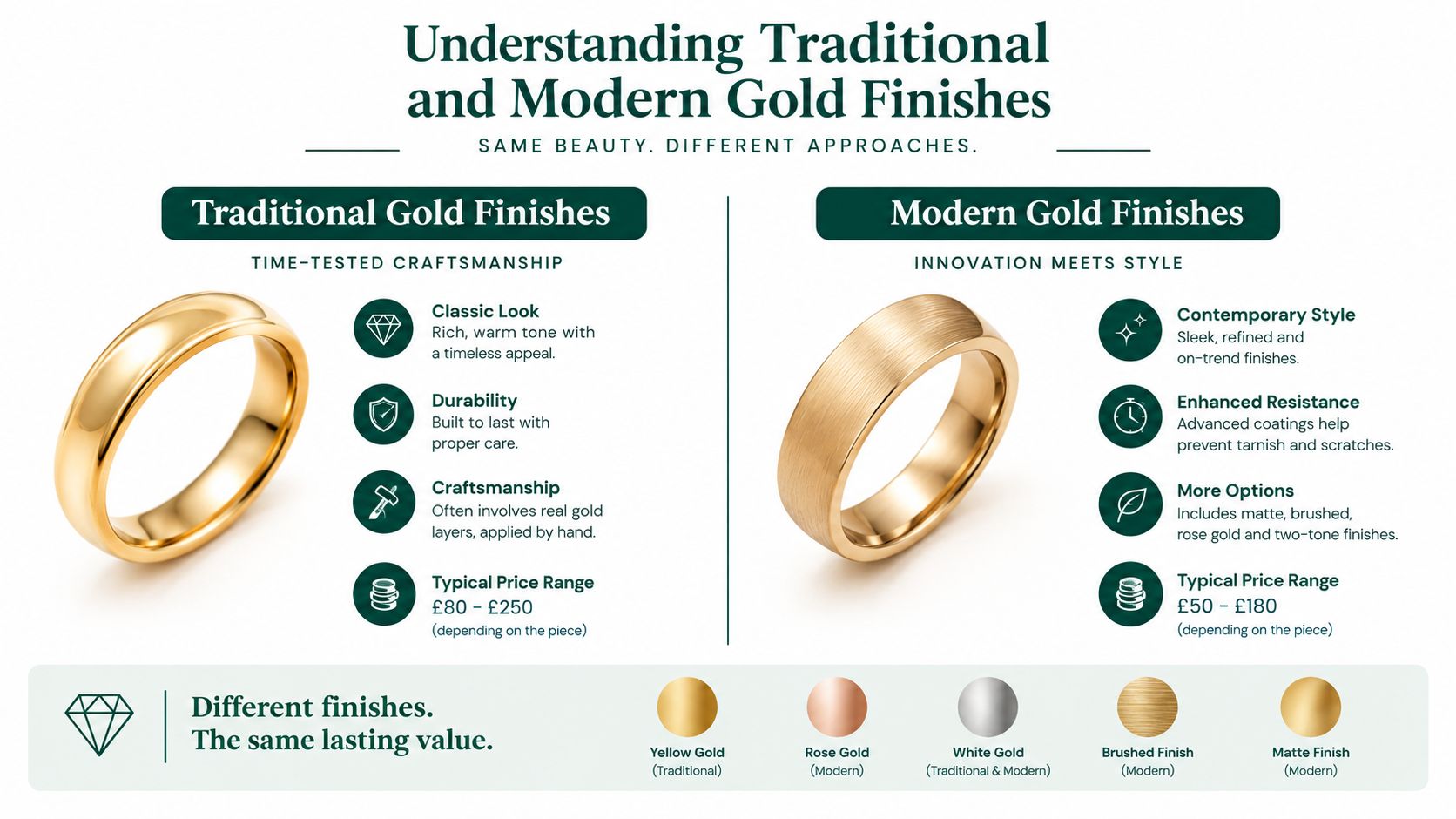
What changes from one finish to another
Water gilding can combine polished and matte areas, so carved details catch light at different angles. A burnished passage tends to look deeper and more reflective, while a satin or unburnished passage gives the ornament visual restraint. The leaf is attached one leaf at a time, and the V&A notes that it is extremely fragile during application before burnishing and sealing.
Metallic paint offers a more uniform appearance. It may suit a contemporary interior, but a sprayed surface often reflects light evenly rather than revealing the subtle variation of a hand-worked frame. Depending on the coating and preparation, later touching, cleaning or repairs may be difficult to blend.
Plated finishes can provide a hard, consistent skin over a suitable substrate, but the result depends heavily on the underlying frame and the quality of the finish. Ask what material has been used, how the surface is protected and whether future repair is possible. Don't assume that a higher shine indicates better construction.
| Finish | Visual character | Collector's concern |
|---|---|---|
| Water gilding | Layered, varied, often richly reflective | Skilled and fragile, requiring careful handling |
| Metallic paint | Even and immediately bright | Can look flat and may be difficult to repair invisibly |
| Plated finish | Consistent, crisp surface | The substrate and coating quality determine longevity |
| Imitation leaf | Can resemble genuine leaf closely | Material, tarnish and maintenance behaviour differ |
For a room mood board, it can be useful to compare the frame with other metallic artwork, including gold abstract canvas art. That comparison should remain aesthetic. It doesn't replace a conservation assessment of the poster frame.
A serious framer should tell you whether the proposed frame is water gilded, oil gilded, painted, plated or finished with imitation leaf. The practical answer may be a modern finish, particularly where weight, cost or a clean contemporary line matters. The mistake is buying on colour alone and discovering later that the frame cannot be safely cleaned, supported or repaired.
Specifying Conservation Glazing for Original Paper
The most important component of a gold poster frame is usually invisible. For original paper, specify glazing that minimises radiation below 400 nm while maintaining high visible-light transmission, following Tate's guidance on glazing options for works on paper. Ultraviolet radiation can cause serious damage even when the frame and room look perfectly acceptable.
Build the specification around the poster
Start with the glazing, not the moulding. Tate commonly uses 3 mm UV-absorbing acrylic for paper works and 5 mm acrylic for frames exceeding 1 metre in either direction. Where the frame can safely support the weight, 4 mm low-reflective glass is another option.
For a large UK Quad or a heavy installation, rigid, adequately load-rated construction with UV-absorbing acrylic is a practical choice. Acrylic reduces weight and breakage risk, but it can scratch, attract dust and develop static, so it needs careful handling and cleaning. Glass gives a different optical experience and may offer excellent clarity, but its weight must be matched by the frame, wall and fixings.
The poster mustn't touch the glazing. Specify a spacer or window mount so air can circulate between the paper and the front surface. Contact can encourage sticking, abrasion or moisture-related damage, particularly when temperature changes produce condensation. A window mount also creates a visual interval that separates the printed image from the metallic border.
The Famous Movie Posters framing guidance is a useful reference point when comparing poster formats and framing decisions, but the final specification should reflect the individual poster's condition, size and value.
UV protection isn't permanent. Check its performance approximately every five to ten years, because protective properties can deteriorate. Keep the receipt or product specification with the poster's records, and note the glazing type, thickness and installation date.
Avoid calling ordinary non-glare glazing archival without checking its specifications. Reduced reflection can improve viewing, but it doesn't automatically provide the required ultraviolet protection. Equally, UV filtering won't stop visible light from fading paper, so the finished display still needs controlled placement and exposure.
A good installation should also include a stable backing board, a reversible mounting method where possible and enough depth to prevent pressure on folds, borders or paper repairs. The gold frame should hold the conservation package securely without forcing the poster flat against the glazing.
Matching Gold Tones to Film Genres and Eras
A gold frame should support the poster's visual language rather than compete with it. Bright polished gold throws light across carved detail and can amplify a poster with theatrical scale. Brushed or matte gold is quieter, while an antique finish introduces darker recesses and a softer relationship with aged paper.
The choice also depends on the poster's printing style. A lavish Technicolor epic can tolerate a frame with strong reflection and formal ornament. A distressed 1970s thriller may look more convincing against a subdued gilt that acknowledges the poster's darker palette instead of turning the display into a period pastiche.
| Gold Finish | Best Suited Film Eras | Ideal Genres |
|---|---|---|
| Bright polished gold | 1920s Art Deco and 1950s studio-era presentation | Epics, musicals, historical dramas |
| Brushed gold | Mid-century modern and transitional designs | Romance, adventure, classic drama |
| Matte gold | Restrained modern interiors and clean gallery settings | Contemporary cinema, understated drama |
| Antique gold | 1930s to 1970s material with visible age or patina | Gothic, horror, noir and period mystery |
| Heavily toned gold | Posters with dark palettes, distressed typography or strong wear | Gritty thrillers, crime and modern noir |
Read the image before choosing the moulding
Look at the dominant colours, typography and density of the artwork. A poster with fine linework can benefit from a narrow, less ornate frame because a busy profile competes with the design. A broad frame may suit a large illustrated Quad, provided the moulding doesn't overpower the printed border.
Bright gold isn't automatically luxurious. On a poster with a deliberately rough, hard-edged design, excessive shine can make the display feel disconnected from the film. Conversely, a very muted finish can drain the energy from an elaborate fantasy or historical image.
The room still matters, but it comes second. Test a frame sample beside the poster under the lighting used in the room. Daylight, warm lamps and low-reflective glazing can all change how the gold reads. A frame that looks rich in a workshop may appear brassy beside a south-facing window.
The best pairing is the one that lets the poster remain the first thing the eye understands.
For collections with several eras, don't force every piece into the same gold. A coherent display can use related warm tones while allowing one poster's period, condition and design to determine its own border. That approach respects the individuality of original cinema material and avoids turning a historical collection into a uniform décor set.
Managing Light Dose and Environmental Risks
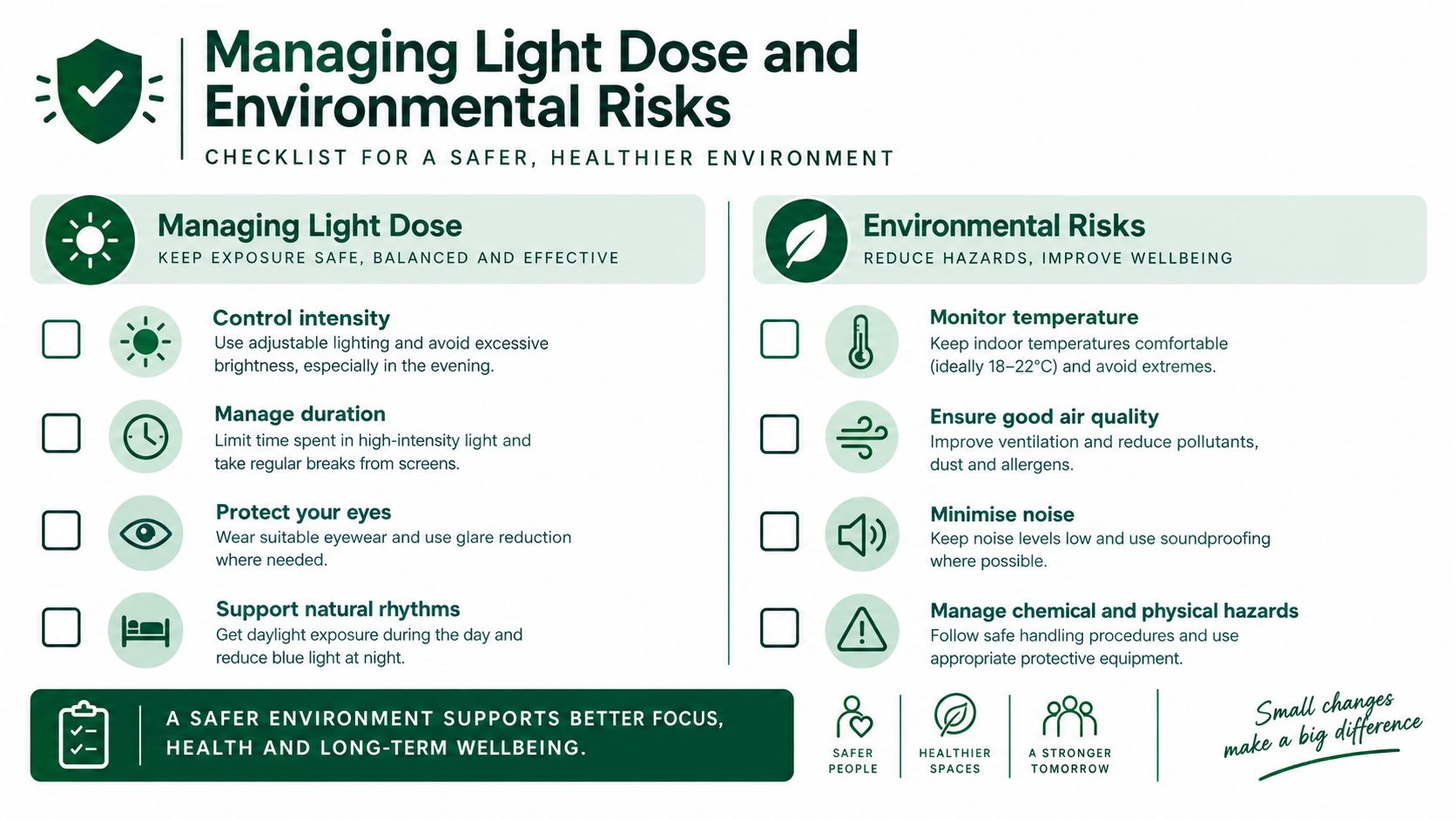
Gold can make a poster look richer. It does nothing to slow light damage. For original paper, the question is how much exposure the object can take before display starts to cost you image strength, paper flexibility and surface stability.
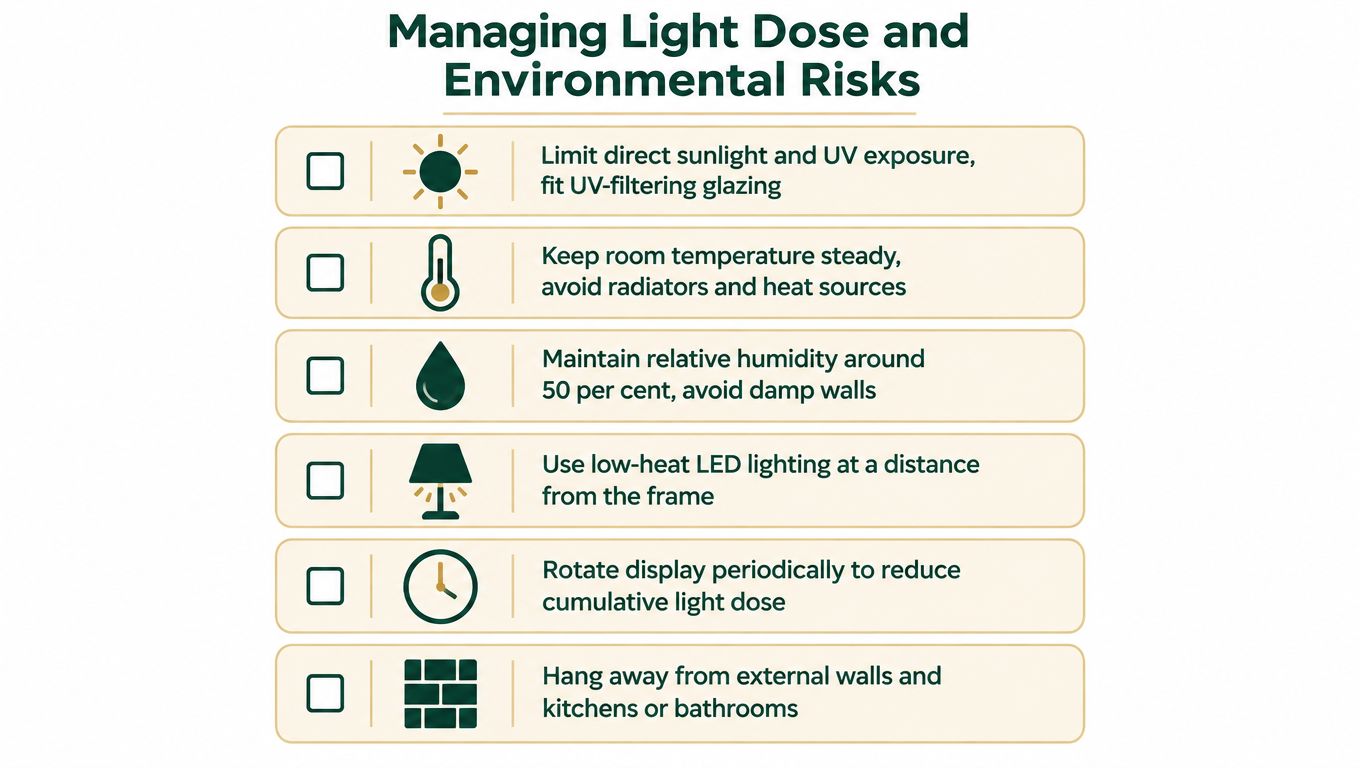
Museums Galleries Scotland advises a maximum of 50 lux for displayed paper collections and no more than 100,000 lux-hours per year, followed by rotation into dark storage once that exposure has been reached. At 50 lux, that annual allowance is used up after roughly 2,000 hours, about 8.3 weeks of continuous display, or around 12.5 weeks at 8 hours per day, according to its guidance on caring for paper collections.
For collectors, that turns display into a scheduling job. Log when a poster goes up, note the light level if you can, and decide in advance when it comes down. If you are comparing illuminated display with ordinary wall hanging, this guide on choosing a light box for a movie poster sets out the trade-offs clearly. UV filtering helps, but visible light still drives fading, cellulose breakdown, embrittlement and image loss.
Assess the room, not just the wall
The room decides far more than the frame finish. The Institute of Conservation recommends a cool, stable environment, ideally 16°C to 19°C with relative humidity at 45% to 60%. Where that ideal is out of reach, keeping humidity stable and below 60% slows paper deterioration and lowers the risk of mould and pests, as set out in its guidance on caring for art on paper.
Use this check before anything goes on the wall:
- Fireplace or radiator: Keep the poster away from direct heat. Heat stresses paper, gilded finishes and adhesives.
- South-facing wall: Avoid strong daylight. Use controlled, low-intensity lighting instead.
- Bathroom or kitchen: Pick another room. Steam and shifting humidity do not belong near framed paper.
- Damp cellar: Unsuitable for display and long-term storage.
- Uninsulated attic: Temperature swings and roof-related damp make it a poor choice.
- Busy hallway: Use solid fixings and hang the frame where bags, doors and furniture will not strike it.
- External wall: Check for cold spots, damp and weak airflow behind the frame.
The frame needs its own care. Never spray cleaner onto gilding. Do not use solvent or household polish unless a conservator has confirmed that the finish will tolerate it. Dust lightly with a soft, clean brush, and lift dust away rather than rubbing across fragile ornament.
A UK museum collections care and conservation plan sets annual exposure targets below 150,000 lux-hours for very light-sensitive objects and below 300,000 lux-hours for less-sensitive material, with storage and display conditions around 50% relative humidity and 15°C to 25°C. It also points to secure cases, monitoring and specialist cleaning for delicate gilded frames.
Good display practice is plain enough. Measure what you can, keep conditions steady, and treat a handsome gold frame as presentation, not protection.
Archival Storage and Safe Transit Before Framing
The safest framed display begins with how the poster is handled before it reaches the framer. When an unframed Quad arrives, keep it flat, supported and protected from unnecessary inspection until you've checked the packaging and condition. Don't press down on folds or attempt to flatten a rolled poster without advice from a conservator.
For flat storage, use enclosures made from calcium-carbonate buffered paper or board with a pH between 6 and 9, free from lignin and sulphur, following the Archives and Records Association guidance on storage enclosures. Polyester, also known as Mylar or Melinex, can be suitable for some flat paper-archive enclosures, but other plastics have poor ageing qualities and shouldn't be used.
A sensible arrival routine
Open the parcel on a clean, clear surface. Keep blades well away from the poster, retain the packaging until you've confirmed that the item arrived safely, and photograph any damage before moving the object. If the poster has mould, loose pieces, tears or bulky attachments, don't force it into a polyester sleeve. Polyester can develop an electrostatic charge, and sleeves are intended for flat objects.
Ordinary plastic wallets, acidic packaging and unbuffered cardboard are false economies. They may look clean while allowing contact, trapped moisture or chemical deterioration. Acid-free tissue can be used for interleaving or wrapping smaller paper items, while valuable posters need a properly sized enclosure that doesn't bend the sheet.
Before sending the poster to a framer, record its title, format, condition and any existing folds or conservation work. The framer should know whether the paper is brittle, whether the image extends into the margins and whether the finished frame will use glass or acrylic. A gold moulding can be selected after these practical constraints are clear.
UK buyers also have delivery protections. Goods should normally arrive within 30 days unless another period was agreed with the seller. If they don't arrive by the agreed date or within those 30 days, the buyer may be able to cancel and obtain a refund or request a replacement. The trader, not the courier, remains responsible until the goods reach the consumer or a nominated recipient, according to UK consumer delivery guidance.
For high-value items, ask how the poster will be packed, whether the tube or board is matched to the format, and what happens if the parcel arrives crushed or wet. A practical explanation of what goods insurance covers can help when discussing transit risks, although the seller's own terms still govern the purchase.
Famous Movie Posters uses original-only sourcing, archival flat-file storage, acid-free polyester pockets for premium items and custom poster tubes with acid-free tissue and kraft paper for formats such as US One Sheets and UK Quads. Its archival storage boxes guidance is relevant when a poster needs a safe interim home before framing.
Famous Movie Posters offers guaranteed original US One Sheets, UK Quads and other cinema formats, along with framing options and guidance for collectors planning a gold display. Visit Famous Movie Posters to source an authentic poster and discuss a presentation that protects its paper as carefully as it showcases its history.